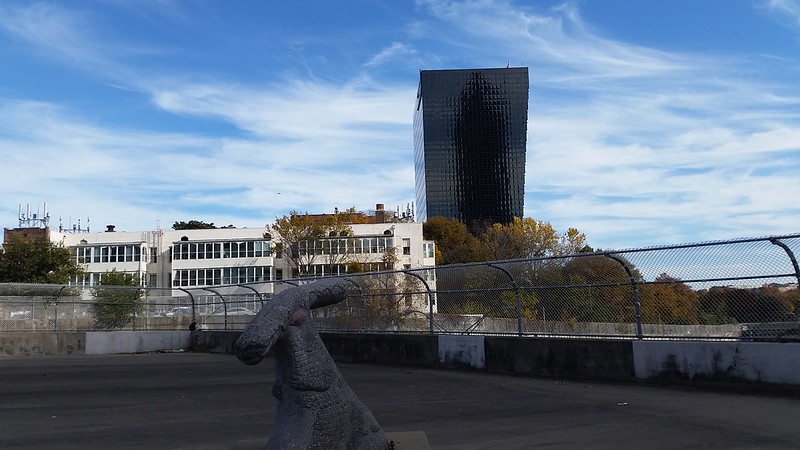
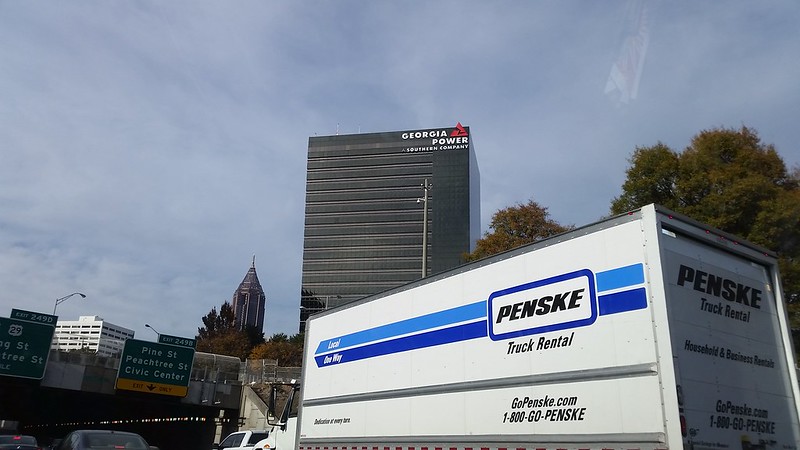
All the folks I knew at Georgia Power / Southern Company worked at the corner of Peachtree and Baker. In 1981 they moved to the new Georgia Power Corporate Headquarters. Georgia Power moved out of downtown while technically staying downtown. Many of our big corporate citizens follow suit. They aren't coming back downtown.
I like the place OK. I've been to a meeting in the top floor boardroom, nice with a terrific view. Way better than the Jackson Street bridge.
But these folks aren't on Peachtree any more.
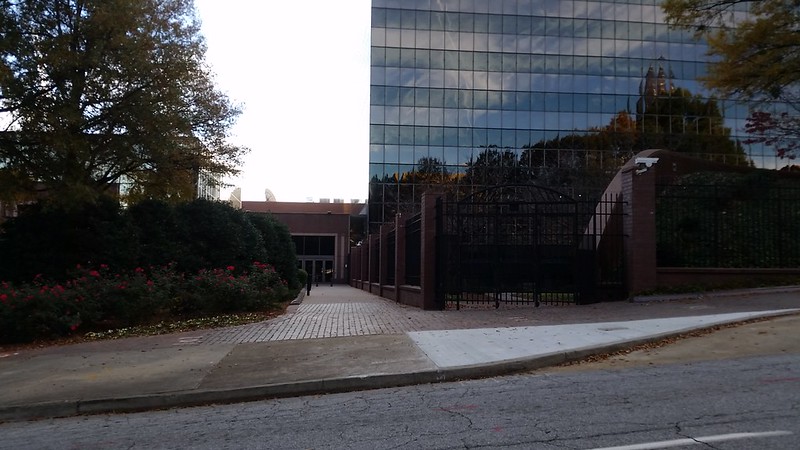
Seemed like a cool idea at the time. The utilities were growing with the region, security was a big issue, and the energy crises. They decided to build an energy conscious landmark between the downtown connector and the Civic Center.
And hey, nearly 300,000 vehicle occupants see it every day.
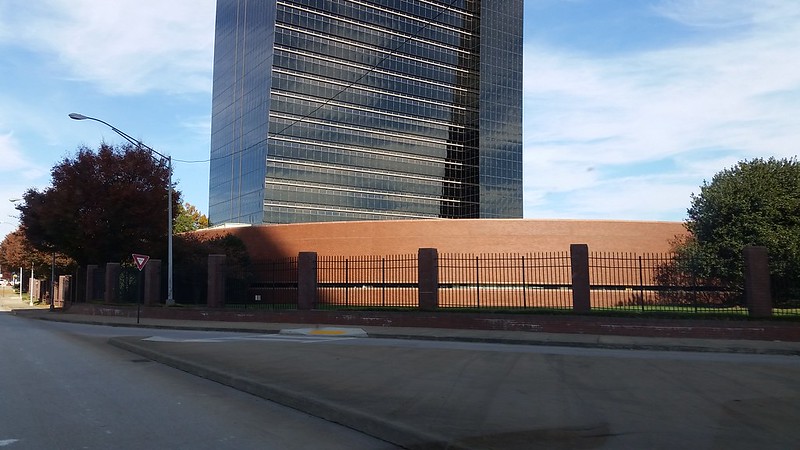
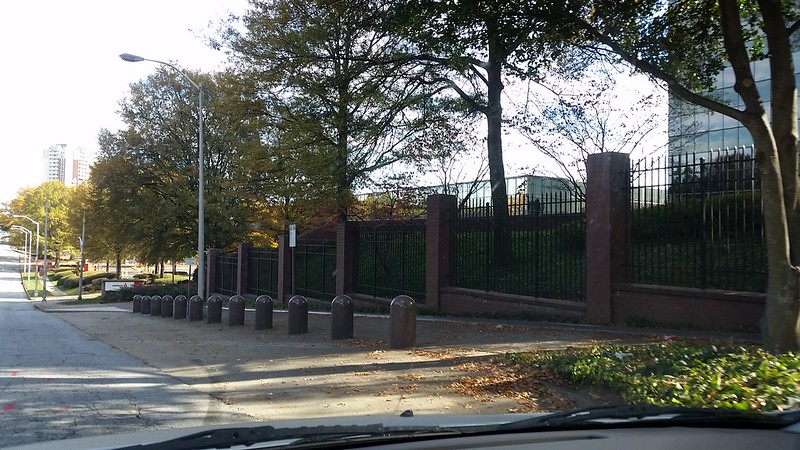
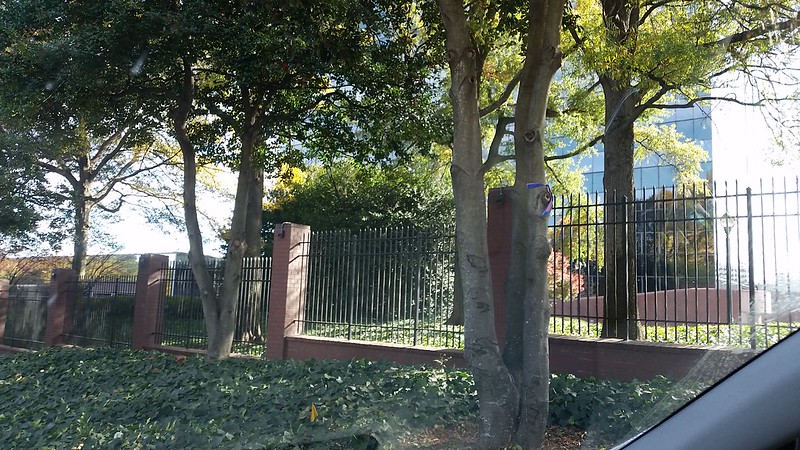
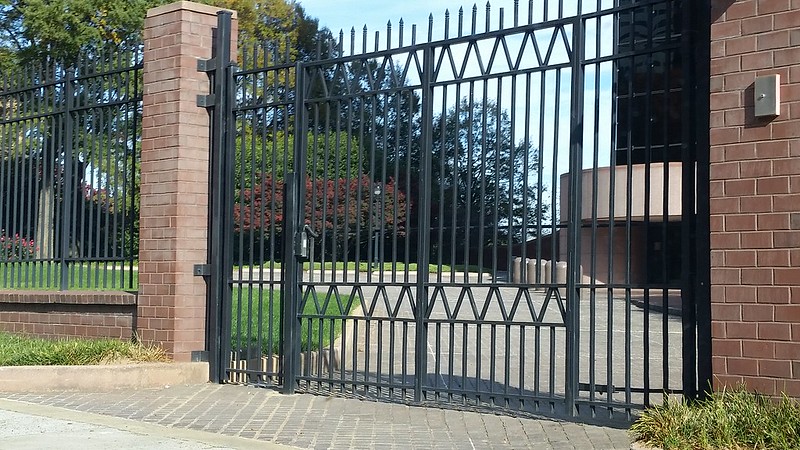
Round here you need a fence and wall.
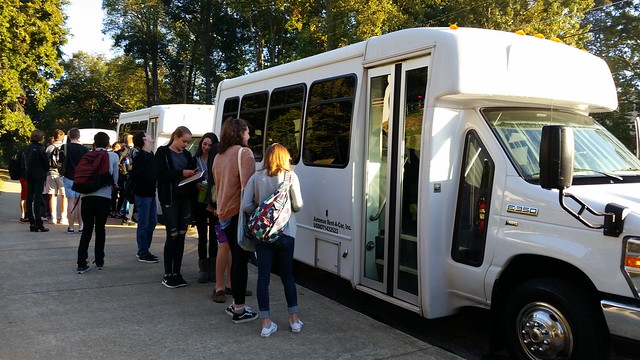
Shuttles park here.
Pedestrian entrance with nice private park to the right.
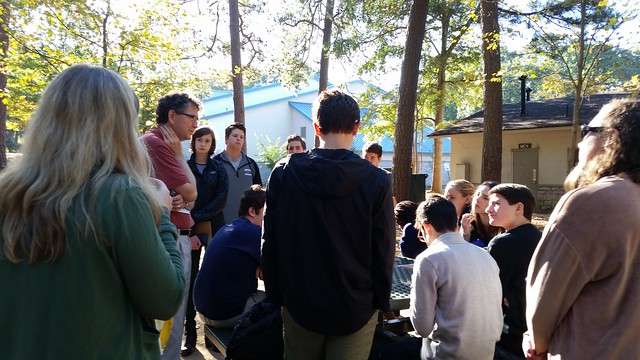
Almost all of them were taller than me. And smarter. Even the quiet ones crackled with energy. It's as if their sensors were all dialed to 11 while most of mine have been shut down by age and experience.
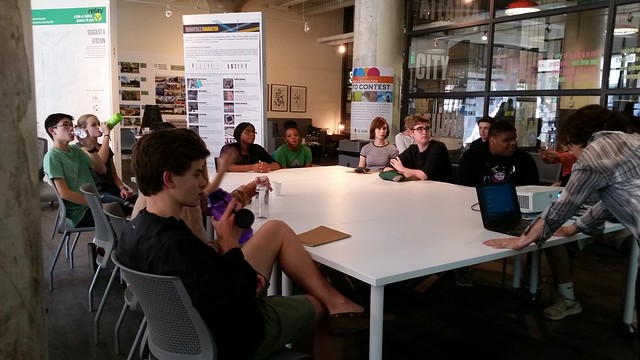
It was Excursion Week at Galloway. Our 20-student group chose "Interaction of Art and Social Justice" with the theme of "separate but equal." With the help of Galloway artist in residence and Georgia State sculpture professor Ruth Stanford the group explored, researched, and made some art. Galloway teacher Mary Stuart Hall gave me Tuesday to "do something." Mary and former Galloway principal, Gordon Mathis, had two little buses at our disposal to take on the town.
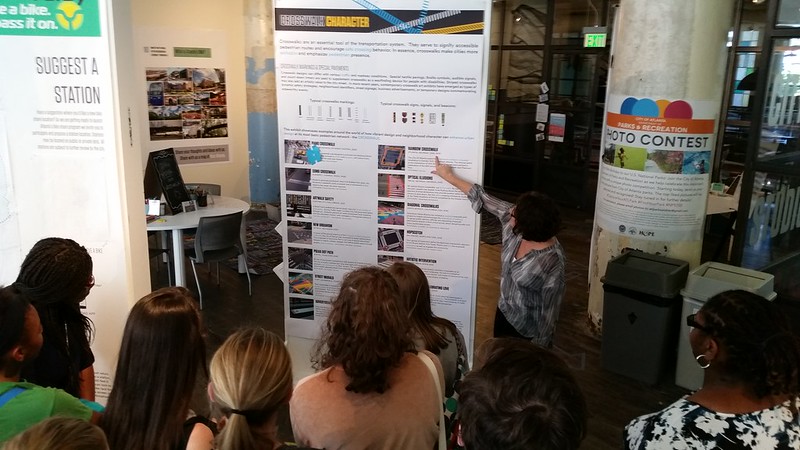
My idea was to visit neighborhoods and corridors "below the line" in the morning then talk with Atlanta's city planners in the afternoon.
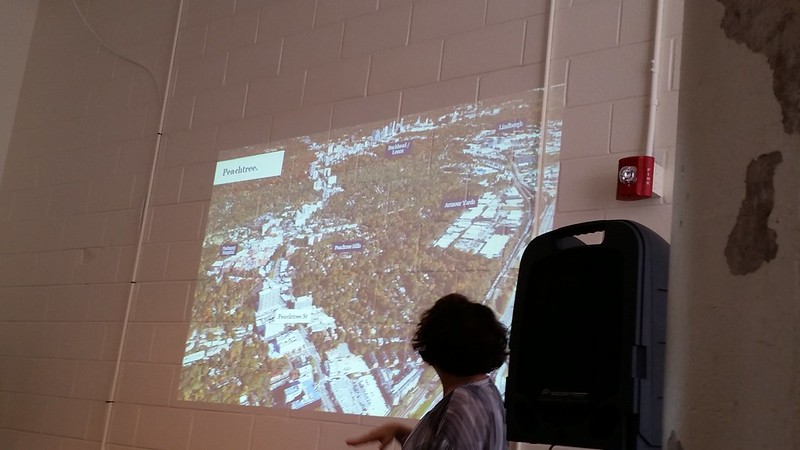
To compare the booming corridors like Peachtree Street
"Peachtree Corridor" Courtesy Atlanta City Studio, Ryan Gravel, Tim Keane, Jodi Mansbach, Vanessa Lira and more.
To compare booming Peachtree with the less booming west side.
To compare the booming Peachtree corridor with the less booming westside corridors of Donald Lee Hollowell, Joseph Boone, Ralph David Abernathy. Courtesy Atlanta City Studio, Ryan Gravel, Tim Keane, Jodi Mansbach, Vanessa Lira, and more.
"Prior to the construction of Washington Park in 1919, there were no recreational parks in Atlanta available to African Americans. The park started with a gift of six and a half acres and expanded to 25 acres (100,000 m2) when completed in 1928. It originally included a swimming pool, dance hall, pavilions, and tennis courts."
Washington Park
I did not know that the current SW BeltLine construction ends at Washington Park. This place will change!
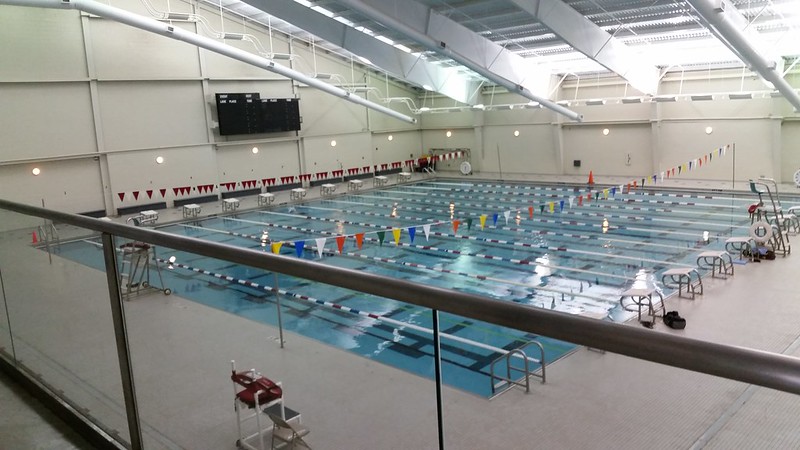
We'll be able to bike to swim at the Washington Park Natatorium.
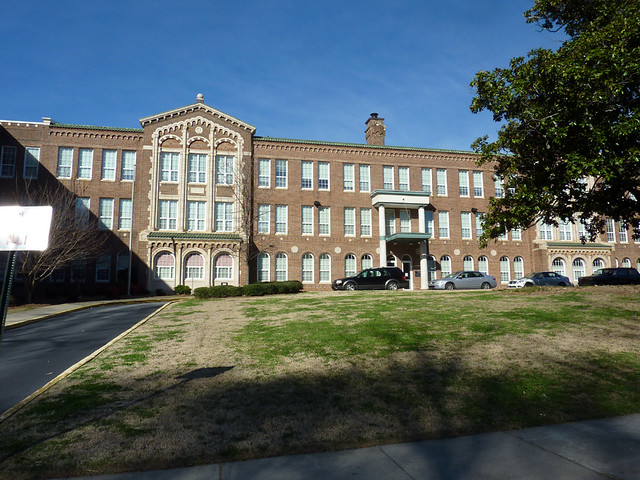
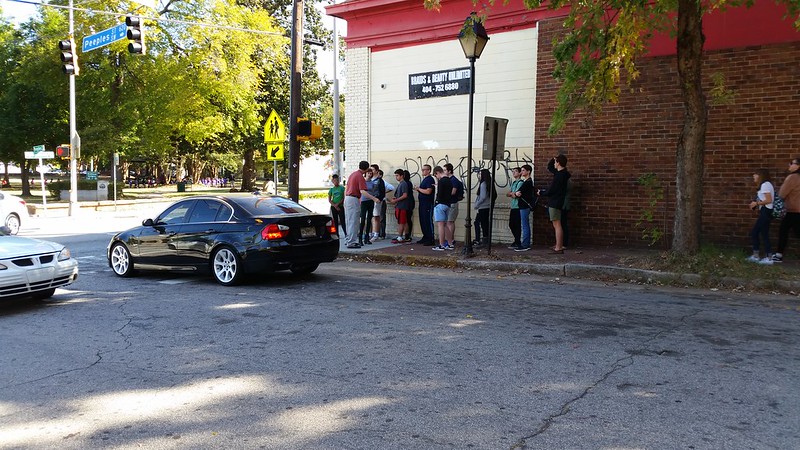
Next stop Brown Middle School and West End. Formerly Brown High School.
Joseph E. Brown Jr. High School, located at 765 Peeples Street SW in Atlanta's West End neighborhood, was opened in 1924
Then we did a West End Walkabout, in my opinion one of the most charming neighborhoods in Atlanta.
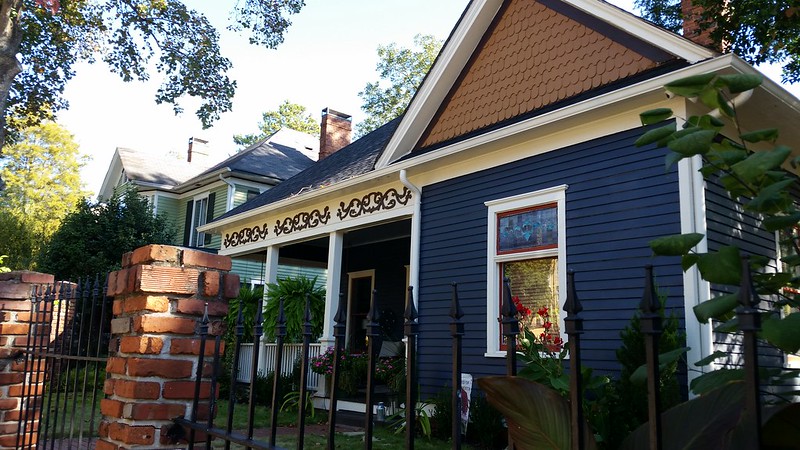
My personal favorite activity: small blocks, styles that have been consistently popular for 150 years, mix of sizes, close to the curb in a way that enhances the beauty of the street as a public space for all passersby.
Tiny tips for touring with teens? I'll work on these for next time.
1. Get two experienced teachers for each 10 students. 2. Do lunch with options: Ponce City Market and the Sweet Auburn Market are superb. 3. Talk briefly to the group whenever you can get them together. 4. Stop talking before they stop listening. 5. Huddle with teachers at stopping points.They make it look easy but... 6. Find a way to integrate their phones. Students are superb at their phones. 7. Pretend that they can't smell you fear. 8. Enjoy the ride though it won't turn out exactly as planed.
We moved to Grant Park. My brain is totally upside down so I'm blogging my block. Here it is.
Bigger than ideal but small for Atlanta. Block size and grided street systems are a big deal.
"A good maximum block size is about 260� x 370� and a minimum size might be like Savannah, about 200� x 300�." - from Richard Dagenhart's "Ten Lessons for Designing Cities:"
Transit Oriented Development (TOD) stirs all the right feelings in the breasts of urbnaists. Gentrification seems the name for evil, on par with McMansion. That's another blogger's blog to blog.
The architecture tourist is particularly interested in the contrast of style and form and will enjoy the construction as a spectator sport. I hope I'll like them, hope they'll feel like home.
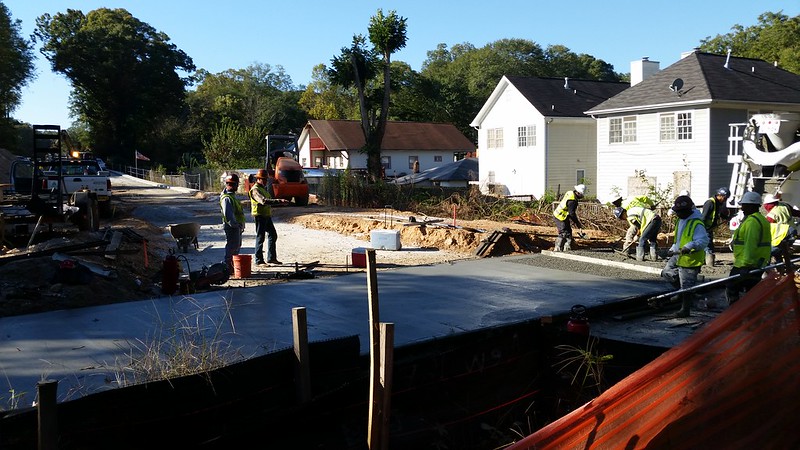
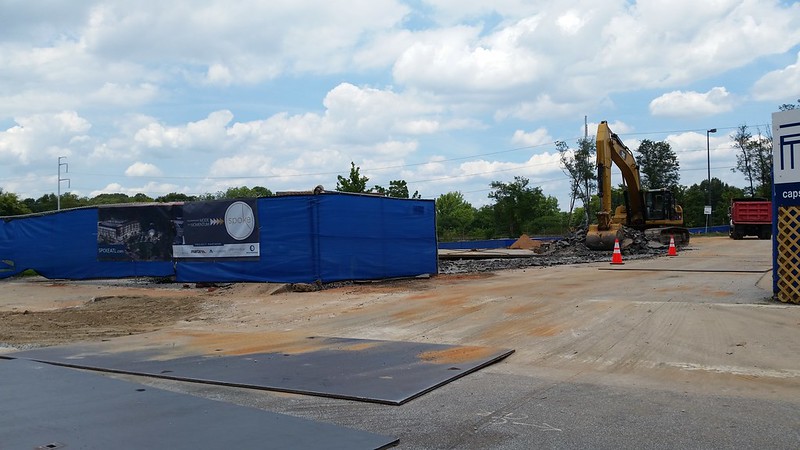
Right now all the hoopla is about Edgewood/Candler Park Station TOD being built in the MARTA parking lot. It's called "Spoke," 224 units with park, restaurant and performing arts center, 20% of the units allocated as affordable housing.
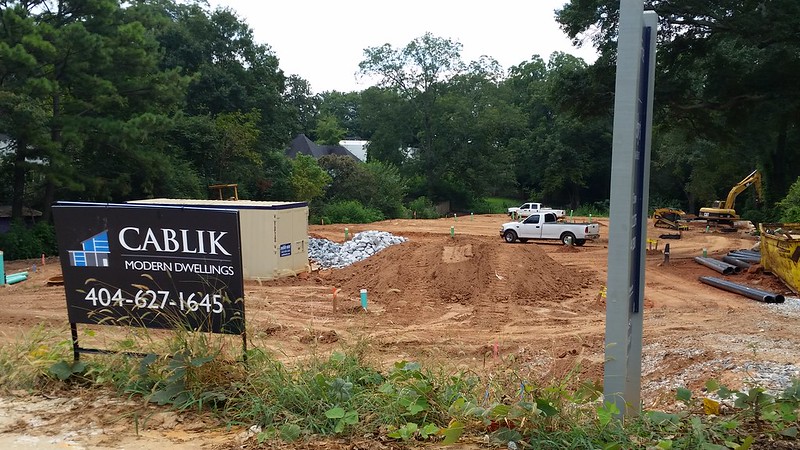
But there are three more projects under way within a couple of blocks all sharing access to MARTA and everything.
Spoke is what 4-story mod apartments look like these days, maybe they'll throw in some natural finishes though the current renderings don't show it.
1388 LaFrance Street by Minerva USA is a traditional styled townhouse development on a corner lot. With Spoke it will form a landmark canyon gateway between the Candler Park and Edgewood neighborhoods. A good thing I think I hope.
La France Walk by Eric Kronberg is a Cottage Court on a shotgun lot, standalone houses in vernacular style that echoes the neighboring houses. My pre-race favorite.